The Other Side of the Hedge: A Cottage Booking Check for Working Farmland
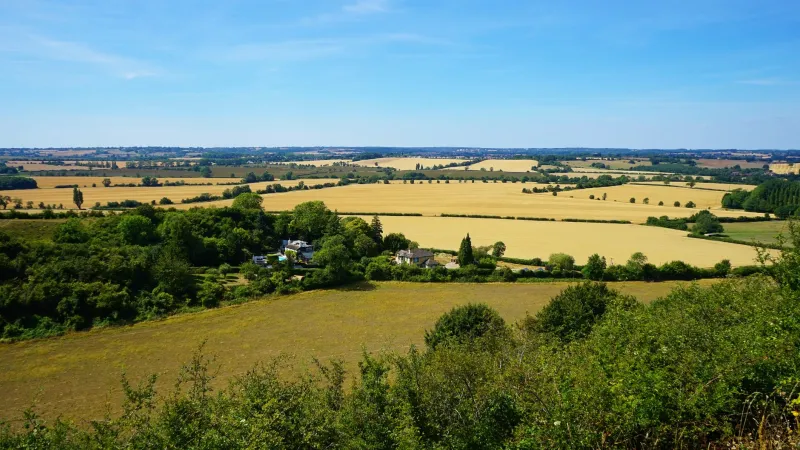
There's a particular kind of quiet that cottage listings like to promise. You know the one: a weather-beaten gate, a few sheep doing something photogenic in the middle distance, and the implication that nothing louder than birdsong will ever interrupt your breakfast. The reality is that most of that lovely scenery is a workplace. The field next door has a rota, and it doesn't always consult the visitor.
None of this is a reason to avoid rural stays. It is a reason to book with your eyes open. A little homework on the farming neighbours can be the difference between a restful week and one spent wondering why a tractor has been reversing past the window since 6am. Here at NTS Holidays, we'd rather you picked the right cottage than the prettiest one.
Start with the map, not the listing photo
Listing photos are framed. Maps aren't. Before you get attached to a kitchen with a range cooker, pull up a satellite view and zoom in properly. You're looking for the things the photographer politely cropped out: large agricultural sheds, rows of polytunnels, a slurry lagoon, feed bins, or a farmyard track that runs right past the boundary.
The scale matters as much as the feature. A poultry unit 400 metres away is a different proposition from one 40 metres from the patio. Look at how many hedges and walls sit between the cottage and the working bits — a decent hedge is nature's sound baffle. The Ordnance Survey's Explorer maps are also worth a look, because they mark footpaths, farm buildings and access tracks that satellite images can blur.
If you want to go a step further, Defra's MAGIC map shows land designations and some agricultural details. It won't tell you whether the farmer is spreading muck on Tuesday, but it will tell you whether the field is permanent pasture, arable, or part of something larger.
Three questions worth asking the owner
Most booking enquiries run along the lines of: is it quiet? The owner says yes, because compared with the M25 it is. That answer won't help you much.
Ask instead what immediately borders the property, and what that land is used for. Ask whether livestock are ever in the adjoining fields, and what kind — sheep are one thing, a field of curious bullocks is another. And ask whether there are seasonal jobs guests tend to notice: silage-making, harvest, muck spreading, hedge cutting. Owners live with these rhythms and often forget they're noticeable to anyone else.
It's also worth asking about public footpaths. A path crossing the farm is usually a bonus, but temporary closures and diversions happen, and a gate that was open last spring might be chained this autumn.
The farming year, in broad strokes
You don't need a diploma in agriculture to book a cottage, but a rough sense of the calendar helps. Lambing tends to dominate late winter and early spring, which can mean floodlights, quad bikes and the occasional bleat at odd hours. Late spring often brings silage-making: mowers, forage harvesters and trailers working long days to catch the weather.
Harvest, depending on the crop and the region, can run from midsummer into early autumn, with combines and grain trailers sometimes still rolling well after dark. Then comes the muck and slurry season, which is essential, entirely normal, and definitely noticeable on the nose. Winter is generally quieter in the fields, though hedge cutting and ditch maintenance still happen.
Weather shifts all of it. A wet May can push silage into June. A kind September can stretch harvest into October. Rather than memorising dates, just remember that 'quiet' in the countryside is a seasonal concept.
Lanes, tractors and the last half-mile
Narrow country lanes are shared with some surprisingly large machinery. If you're arriving on a Friday evening in harvest season, expect to meet a grain trailer at the worst possible moment. Use passing places, don't park in gateways, and give farm vehicles room — they can't always see you and they certainly can't stop on a sixpence.
Mud on the lane is normal. So are tractors turning into fields with no warning. It's not aggression; it's a job with a schedule and a weather window.
Footpaths, dogs and the bull question
Public rights of way are one of the great pleasures of a rural break, but they come with etiquette. Keep dogs on leads around livestock, close gates behind you, and don't assume a field is empty just because you can't see anything from the stile. Bulls with cows and calves are best given a wide berth — and if a path runs through a field with livestock, it's fine to choose a different route.
Check your local council's rights of way map before you travel if a particular walk matters to you, and ask the owner whether any paths are currently diverted.
Match the field to your tolerance, not your fantasy
Some people want the full working-farm soundtrack: lambs, tractors, the lot. Others want a buffer — a hedge, a wall, a bit of distance between the terrace and the tup. Neither preference is wrong, but they lead to different bookings.
Be honest about which one you are. If the smell of muck spreading would ruin your morning coffee, don't book a cottage whose garden opens straight onto arable land in October. If the sound of a quad bike at dawn makes you smile, a lambing-time stay could be a highlight.
The field next door isn't a flaw in the listing. It's a clue. Read it before you pay, and you'll end up with the cottage break you actually wanted.