Before You Click Book: How Locals Read Cottage Reviews
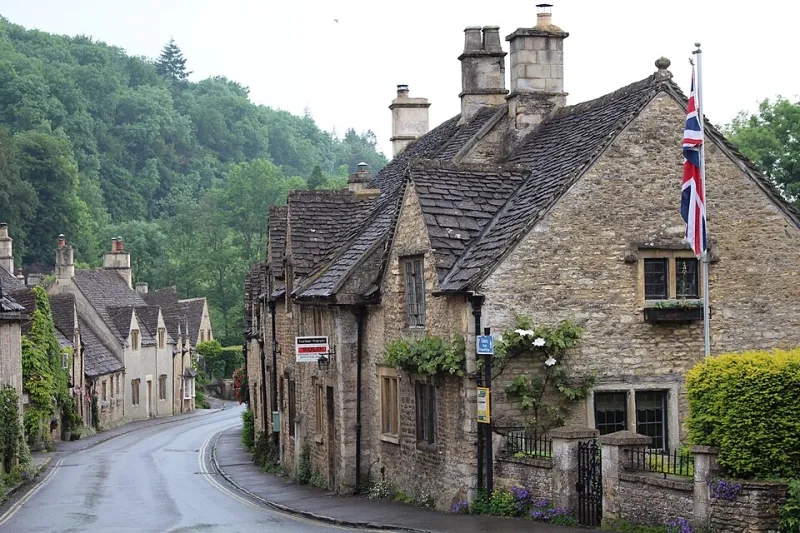
Photo: vilma bharatan , CC0, via Wikimedia Commons
Reviews are the closest thing we have to a trial run. They are also, mostly, written by people who had a nice time and want to say so politely, which means the useful information is often tucked behind a compliment.
Learning to read them is a skill, and it is not the same skill as reading a hotel review. A cottage is somebody's converted barn, a farm building, a wing of a house. It comes with an owner's assumptions, a specific lane, a specific boiler and a specific set of neighbours. The review is your only preview of all that. So read it properly.
Start with what the reviewer actually did
Before you judge the stars, look at who wrote them. A couple in their thirties staying two nights in June are telling you something different from a family of five staying a week in February. Search the reviews for the phrase most relevant to you — 'dog', 'toddler', 'mobility', 'winter' — rather than reading all thirty in order from the top.
A five-star review from someone who describes exactly your sort of trip is worth ten vague ones. A four-star review from someone whose needs are nothing like yours can be safely ignored.
Vague praise and what it usually hides
'Lovely cottage, would recommend' is not information. Neither is 'everything we needed'. Neither is 'perfect location'.
None of these are lies, but they are placeholders. When a review is warm and completely non-specific, the reviewer either had an unremarkable time or is being kind. Look instead for the sentence after the adjective. 'Spotlessly clean and really well equipped — we cooked every night' tells you the kitchen works. 'Great location' tells you nothing until it is followed by 'five minutes from the pub'.
Here is the trick worth remembering: reviewers almost always mention the thing that surprised them, whether good or bad. The detail buried in paragraph three — the low beam over the stairs, the shower that takes an age to warm, the surprisingly excellent chip shop — is the real review.
Decoding the location words
This is where most disappointments come from, and it is rarely anyone's fault. Words about place mean different things to different people.
'Walkable' — walkable to what, on what, and in what shoes? A farm track is walkable in wellies and not much fun in suede. If no review mentions the walk itself, assume you may want the car.
'Remote' or 'off the beaten track' — usually a genuine selling point, occasionally a warning about a mile of single-track with passing places. Check whether reviewers describe the drive in terms of delight or relief.
'Peaceful' and 'quiet' — ask what the quiet is made of. No traffic, or no neighbours at all? Some people find the second unnerving in the dark.
'Close to amenities' — genuinely meaningless on its own. Any review that says 'we walked to the shop each morning' has just answered the question for you.
'Near the coast' — near can mean a ten-minute stroll over dunes or a fifteen-minute drive. Reviewers who actually walked will say so.
'Dog-friendly' has at least three meanings
There is the cottage that welcomes dogs and provides a hose, a towel and a tiled floor. There is the cottage that permits a dog, reluctantly, with a list of rules about the sofa and the bedrooms. And there is the cottage where the garden is not actually enclosed, whatever the listing implies.
Look for reviews that say 'the garden was secure' or 'they even left dog treats'. Look equally for ones that mention a road, a working farm with livestock, or a gate that would not latch. Owners with dogs write differently about dogs; it shows.
Read the photos as a set, not one at a time
Listing photographs are chosen to sell a mood. Reviews with photos show you a Tuesday.
Watch for what is missing from the professional set: a clear shot of the kitchen from more than one corner, the other side of the bedroom, the garden boundaries, the view from the window that is not the good one. A listing with eleven photos of the lounge and none of the bathroom has told you something.
Then compare the guest photos against the glossy ones. Check the same corner of the room. Furnishings get replaced, and a 2021 review with a photograph of a very comfortable sofa may be describing a sofa that is no longer there.
A short checklist before you reserve
- Read every review from the last twelve months, plus two from winter, if any exist.
- Search within the reviews for your own keywords: dog, baby, heating, road, pub, parking.
- Look for a review that names the nearest village, pub or shop. Named places are a sign someone really went.
- Note how the owner replies to a critical review. A calm, factual response is reassuring; a defensive one is also information.
- Check the listing's small print on arrival and departure times, and whether the price shown includes cleaning and the damage deposit.
- Read the 'access' notes twice if anyone in the party has mobility needs.
Two questions worth asking directly
If anything is still unclear, message the owner before booking rather than after. Two questions do most of the work: how far is the nearest shop, pub or station, and is the garden enclosed? Replies that are specific and unbothered tend to come from people who know their property. Replies that are vague about distances are quietly telling you something too.
Reviews will never give you the whole house. But read well and they will give you the shape of your week — the walk to the shop, the drive to the coast, the dog in the garden — and that is exactly the part you are actually paying for.