Four Beds, Two Armchairs: How to Spot a Cramped Cottage Before You Pay

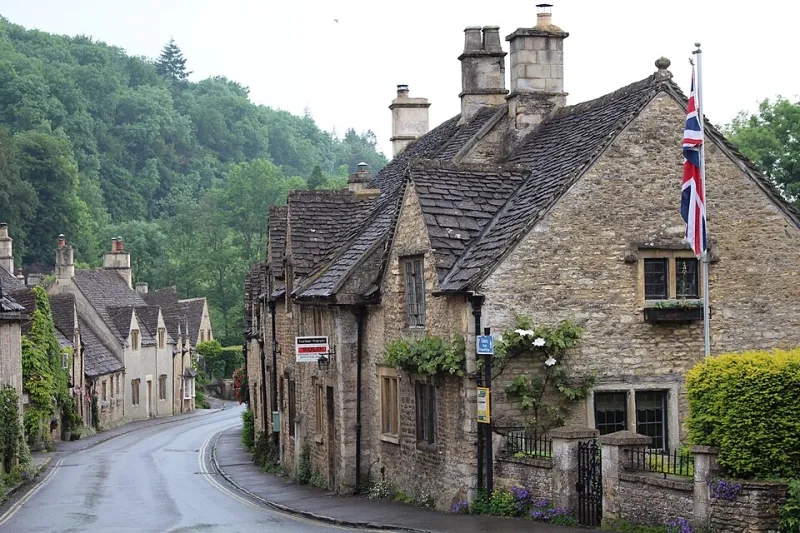
Photo: MatthiasKabel, CC BY-SA 3.0, via Wikimedia Commons
Every cottage listing opens with the same triumphant number. Sleeps four. Sleeps six. Sleeps eight. It sounds like a fact, and technically it is — there are that many beds. What it doesn't tell you is whether four people can sit down at the same time, whether anyone can get to the kettle without asking someone else to move, and whether the second couple will be sleeping in what is frankly a corridor with a duvet in it.
We've all done it. You arrive, bags in the hall, and within four minutes someone says the sentence that sinks a weekend: "Oh. It's smaller than the photos." This piece is about never hearing that sentence again.
Beds are the easiest number to count and the least useful
Four beds is not the same as four bedrooms, and four bedrooms is not the same as four comfortable bedrooms. Check three things before anything else.
First, how many of those beds are in a room that closes properly behind a door. Sofa beds in the lounge, daybeds in a snug, and bunks tucked under a staircase all count in the occupancy figure and none of them count as a decent night's sleep for an adult.
Second, what size are the beds. A 'double' in a converted seventeenth-century cottage is sometimes 4ft 6in wide and 5ft 10in long, wedged between two walls. If two tall adults are travelling, look for 5ft beds or ask directly — good owners will tell you the exact dimensions without huffing.
Third, is the sleeping arrangement actually fair. One master with a vaulted ceiling and an en-suite, plus two singles in a low-ceilinged box room, is a sleeps-four cottage for a couple with children. For two couples splitting the bill, it's a recipe for quiet resentment.
The dining table is the most honest furniture in the house
Photographs love a table. Photographers tilt the camera, angle the chairs and shoot from the doorway so you can't see that the fourth side is against a wall. Count the chairs in every photo, and count them again in the ones where people are sitting down — those are the most revealing shots in any listing, because nobody stages a chair they don't have.
Look, too, at whether the table is a dining table or a bistro table with ambitions. Two people can eat comfortably off 70cm of surface. Four need something closer to a metre and a half, plus elbow room and somewhere to put the serving dish that isn't a windowsill.
While you're in the kitchen photos: how many hobs, how big is the fridge, and is there a dishwasher. Four adults self-catering for a week generate a genuinely startling amount of washing up, and a fridge with no shelf space turns a nice Saturday market shop into a game of fridge Tetris by Tuesday.
One bathroom, four adults, one hour
This is the single most common source of friction on group cottage breaks, and the one owners gloss over hardest. One bathroom between four people is workable. One bathroom between four people who all want a shower before a 9.30am table booking is a timetable negotiation.
So look for a second loo even if there isn't a second shower — a downstairs cloakroom makes an enormous difference. Check whether the shower is over the bath (fine for some, hopeless for anyone with a dodgy knee) and whether there's any mention of water pressure. Rural cottages on private springs are lovely and often have showers with the enthusiasm of a dripping tap. If it's not mentioned and it matters, ask.
Beams, doorways and the height tax
Low beams are sold as charm, and they are charm — until the third head-bump of the morning. A few things worth noticing in photos and floor plans:
- Ceiling height in upstairs rooms. Sloping ceilings that look atmospheric in a wide-angle shot can mean standing room only in the middle third of the bedroom.
- Doorway heights. Look for the telltale strip of foam or a dangling padded bumper in photos — owners usually protect the beams people hit most.
- Stairs. Spiral staircases photograph beautifully and are genuinely awkward with a suitcase, a dog or anyone unsteady on their feet. A floor plan will show you the turn; photos usually won't.
- Ceiling height in the bathroom. Showering under a slope, hunched, is a particular kind of holiday memory.
If anyone in your group is over about 6ft, make this a direct question to the owner rather than something you infer from a photo taken at chest height.
Photo angles are doing a job — learn to read them
Wide-angle lenses are standard property photography and not a conspiracy, but they distort in predictable ways. Skirting boards that seem to curve, a fireplace that looks banana-shaped, and a floor that appears to stretch on forever all suggest a very wide lens. Mentally shrink the room by about a fifth.
The more useful trick is noticing what's absent. There's often no photo of the room from the corner, showing the whole space in one honest frame. There's rarely a picture of the shared bathroom shelf. And if the floor plan in the listing looks like a rough sketch rather than a measured drawing, that's usually because a measured drawing would be less flattering.
The description has a vocabulary of its own
A short, unsentimental glossary:
- 'Cosy' — small, possibly charming, possibly tight. Usually small.
- 'Compact' — small and not pretending otherwise. Respect the honesty.
- 'Bijou' — small with a marketing budget.
- 'Traditional' — low ceilings, uneven floors, bring slippers.
- 'Open-plan living' — check where the sofa faces, because sometimes the answer is 'the fridge'.
- 'Ideal for a romantic retreat' — the owner does not think four adults fit in it either.
None of these are lies. They're just doing work that a number can't do.
A five-minute check before you pay
Sit down with the listing and answer these out loud, with your travelling party if they're in the room:
- How many bedrooms have doors, and what size is each bed?
- How many chairs at the table — and is there room to pull them out?
- How many toilets, and is the shower over a bath?
- Is there anywhere to sit that isn't the dining table or a bed, for four people, at once?
- Where do coats, boots and wet dogs go?
- What's the parking situation — one space, two, or 'on the lane, subject to goodwill'?
Six questions, ten minutes, and the difference between a cottage that sleeps four and a cottage that works for four. The second one is the one you actually want, and it's worth asking about rather than hoping for.