Gravel, Grab Rails and the Gap Under the Door: A Real-World Guide to Cottage Access Statements
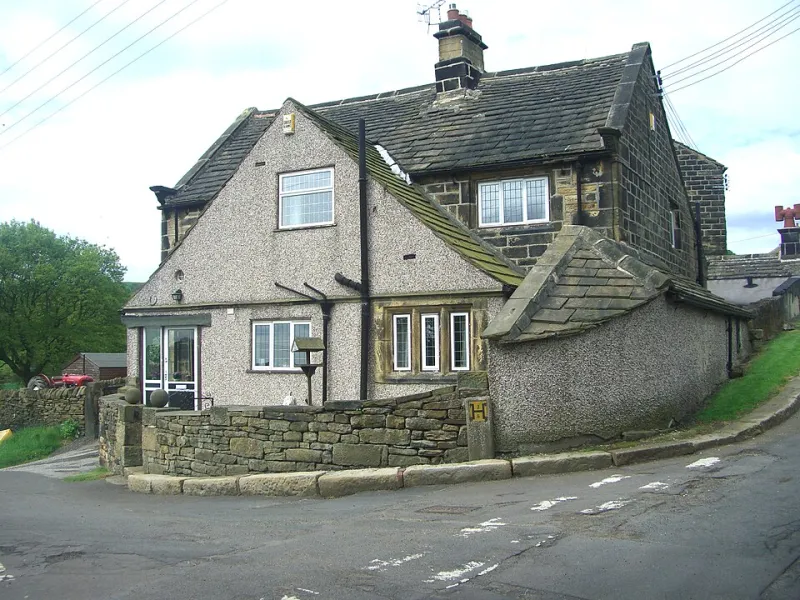
Photo: Mick Knapton, CC BY-SA 3.0, via Wikimedia Commons
Cottage listings have become much better at showing us the romantic bits. We get the low beams, the squishy sofa, the view from the kitchen window. What they are still patchy at is the practical geography of getting from the car to the kettle. That is where the access statement comes in, and why it deserves more than a quick skim before you book.
At NTS Holidays, we read a lot of access statements. Some are excellent, written by owners who have actually tested their own property with a tape measure and a critical friend. Others are a paragraph of hopeful adjectives. The difference matters most when you have mobility needs, use a wheelchair or walking aid, travel with someone who does, or simply know that a steep gravel path will ruin your first evening.
Why the Access Statement Is a Translation Exercise
An access statement is not a legal guarantee. It is a description, and descriptions are only as useful as their detail. The phrase 'ground-floor bedroom' is a good example. It sounds reassuring, but it tells you nothing about the route to that bedroom. Is there a step down into the hallway? A lip at the door? A narrow turn past the boot rack? Does the ground-floor room have its own bathroom, or does the route to the loo involve a stair?
Read the statement slowly and underline every vague word. 'Easy access' is vague. 'Level access' is better, but still needs context. 'One shallow step' is useful because it admits there is a step. 'Suitable for those with limited mobility' is a phrase to treat with caution until you know what the owner means by limited. The statement should describe the place, not the sort of person the owner imagines will enjoy it.
Ground Floor Is Not the Same as Step-Free
This is the single most common misunderstanding in rural cottage bookings. A ground-floor bedroom can still sit at the end of a corridor with a threshold strip, a tight bend and a door that opens inwards over the bed. A ground-floor bathroom can still have a shower tray with a lip of several inches. A ground-floor living room can still be reached via a gravel path that slopes away from the door.
If step-free access is essential, ask for the route in sequence. From the parking space to the front door. From the front door to the bedroom. From the bedroom to the bathroom. From the kitchen to the sitting room. A good owner will be able to describe each transition, including the surface underfoot and any changes in level. If they cannot, that is not necessarily a red flag, but it is a reason to ask for photographs or a short video call.
Paths, Thresholds and the Honest Millimetre
Gravel is the classic rural cottage surface, and it is rarely kind to wheels. Fine gravel can be manageable; loose, deep gravel is not. The same goes for cobbles, uneven flagstones and grass that turns to mud in November. Ask whether the path is firm, level and bound. Ask if there is a handrail on any steps. Ask whether the lighting on the route is motion-sensor or a switch you have to find in the dark.
Thresholds are the quiet villains of access. A lip of two centimetres might be nothing to a walking boot and everything to a wheelchair front wheel. Door widths matter too. A standard cottage doorway can be surprisingly narrow, especially in older properties. If you use a walking frame or wheelchair, ask for the clear opening width of the main doors, not the door frame width. They are not the same measurement.
Bathrooms Are Where Promises Get Tested
A bathroom can make or break a stay. Look for detail on the shower. Is it a walk-in shower with a level tray, or a tray with a step over? Is there a grab rail, and if so, where is it fixed? A grab rail beside the toilet is useful; one on the opposite wall may not be. Is the bathroom upstairs or downstairs? Is the floor tiled and slippery when wet? Is there space to turn, or to park a walking aid within reach?
If the statement mentions a bath mat, a shower stool or a raised toilet seat, ask whether these are provided as standard or on request. Ask if the bathroom has a lock that can be opened from the outside in an emergency. These are not morbid questions. They are the sort of practical detail that lets you relax once you arrive.
Doorways, Turning Circles and Furniture That Moves
Access is not only about the fixed building. It is also about what the owner has put inside it. A cottage can have wide doorways and still be cluttered with a console table in the hall, a rug that ruckles underfoot and a dining chair that blocks the route to the kitchen. Ask whether furniture can be moved. Ask whether there is a clear turning space in the main rooms. Ask if the owner has a floor plan with measurements, or can send one.
Photographs help, but they can flatter. Wide-angle lens shots make rooms look bigger and doorways look wider. Look for clues instead: the height of the skirting board, the size of the tiles, the way the sofa sits against the wall. If a room looks packed in the photos, it will feel packed in person.
Questions to Ask Before You Pay
A short, specific email is your friend. Ask for the access statement if it is not online. Then ask these questions:
- What is the surface of the path from parking to the door, and is it level?
- How many steps are there between the car, the front door and the ground-floor bedroom?
- What is the clear width of the bathroom door and the bedroom door?
- Is the shower a step-in tray or a level walk-in?
- Are there grab rails, and where are they fixed?
- Can furniture be moved to create a clear route?
- Is there a mobile signal or Wi-Fi option for contacting someone in an emergency?
You do not need to ask all of these every time. But if accessibility is the reason you are booking, ask enough to build a picture. A good owner will answer plainly. A vague answer is information too.
A Practical Test for Your Own Needs
Before you book, describe your own route through the cottage in the same sequence you would use on arrival. Car. Path. Door. Hall. Bedroom. Bathroom. Kitchen. Outside space. Where are the pinch points? Where might you need to stop, sit or ask for help? If the statement cannot answer those questions, ring the owner. It is better to spend ten minutes on the phone than a week in a cottage that looked accessible on paper and feels impossible in practice.
The best access statements are not glossy. They are specific. They mention the gravel, the lip, the narrow bit and the handrail. That is exactly what you want. A cottage that is honest about its limits is far more welcoming than one that promises everything and leaves you to guess.