Mind Your Head: How to Tell Whether an Old Cottage Will Charm You or Cramp You

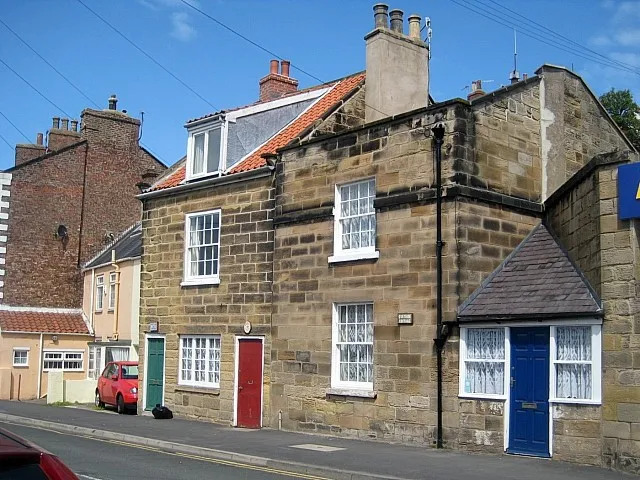
Photo: Chris Light, CC BY-SA 4.0, via Wikimedia Commons
There is a particular kind of cottage photograph that makes sensible people book immediately. A low beam. A window seat. A staircase that turns at the top. Stone walls the colour of clotted cream. It looks like the England of a costume drama, and for a weekend that is exactly what many of us want.
The problem is that costume dramas are not usually filmed by people carrying a suitcase and a weekend bag. Old cottages were built for different bodies, different furniture and different ideas of comfort. That does not make them bad places to stay. It makes them places worth reading carefully. Character is a pleasure, but it has measurements.
Character Has a Ceiling Height
When you look at a listing photo, find something you know the size of. A door. A chair back. A wine glass on the table. Then look at the ceiling above it. If the ceiling looks close enough to touch in a wide-angle shot, it will feel closer in person. That is not necessarily a problem in a bedroom, where you mostly sit and lie down. It is more of a problem in a kitchen, where you stand at a worktop and open cupboards.
Beams are the other clue. A beam that cuts across a room at shoulder height in a photograph is going to be a permanent negotiation in real life. Ask how high the lowest beam is. Ask where it is. A beam over a doorway is different from a beam over the bed, the sofa or the route from the kettle to the table.
Read the Photos Like a Surveyor
You do not need to be an architect to read a cottage listing. Start with the windows. Small windows with deep reveals suggest thick walls and, often, low ceilings. Look at the top of the window in relation to the ceiling. If there is very little wall above it, the room is probably compact. Look at the doors. Are they full height, or do they look like they were made for a smaller generation? A photograph that shows a person stooping is a useful warning, even if the person is only there to demonstrate the fire.
Furniture placement tells you a lot. If the sofa is pushed right against a beam, or the bed is tucked under a slope, the room is working hard to fit its contents. That can be charming in a small cottage. It can also mean there is nowhere to put a suitcase without tripping over it. Look for floor space that is not occupied by rugs, baskets or decorative logs. In an old cottage, floor space is a luxury.
Beams Are Not Decoration
It is easy to think of beams as part of the atmosphere. In practice, they are structural and immovable. A low beam over the middle of a room changes how you move through it. You will duck, or you will learn to duck. If you are tall, or if you have guests who are tall, or if you are carrying a hot tray, that matters.
Ask the owner for the lowest beam height and the ceiling height in the rooms you will use most. Ask whether there are any beams in the bathroom or above the stairs. A beam over a bath is a particular kind of hazard. If the listing mentions 'character beams throughout', treat that as an invitation to ask exactly where they are and how low they hang.
Stairs, Turns and the Suitcase Problem
Old cottage stairs are often steep, narrow and winding. Some are beautiful. Some are more like a ladder with a handrail. If you are travelling with a large suitcase, a week's food shopping or a dog, the stairs become a practical consideration rather than a charming detail.
Look at the photographs of the staircase. Is there a turn? Is there a landing? Is the handrail continuous? Is there a door at the top or bottom? A door at the top of a steep stair can be awkward with luggage. A turn halfway up can be fine for a weekend bag and miserable for a heavy case. If the cottage has a ground-floor bedroom, ask whether the stairs are the only route to the bathroom. That is the sort of detail that decides whether an old cottage works for you or merely looks good.
When Historic Is Charming and When It Is Cramped
Charm is not the same as comfort, but the two can coexist. The difference is usually whether the cottage has been thought about. A low ceiling in a bedroom can feel cosy if the bed is well placed and the lighting is gentle. A low ceiling in a kitchen can feel oppressive if the cupboards are cramped and the worktop is always full. A narrow doorway is fine if it leads to a small, well-planned room. It is less fine if it is the only route to the only bathroom.
The best old cottages make their limitations clear and then work around them. They put the sofa where you can sit without hitting your head. They provide a lamp by the low chair. They leave a clear route through the hallway. They do not pretend that a seventeenth-century building has twenty-first-century proportions. That honesty is worth more than any amount of exposed stone.
Questions for the Owner
A short email will save you a lot of ducking. Ask for the lowest ceiling height and the lowest beam height in the main rooms. Ask about the stairs: how many steps, whether there is a turn, and whether the handrail is continuous. Ask about door heights and whether any doorways are particularly narrow. Ask whether the bathroom is upstairs or downstairs. Ask if there is space to store a suitcase without blocking a walkway.
If you are tall, say so. Owners of old cottages are used to this question, and a good one will give you a straight answer. If you have mobility needs, ask for the route in sequence, not just the room layout. If you are travelling with a dog, ask about the stairs and the garden gate. These are not fussy questions. They are the questions that let you enjoy the beams instead of resenting them.
An old cottage can be a wonderful place to stay. It can also be a reminder that the past was built to a different scale. The trick is to know which one you are booking before you arrive. Read the photos for clues, ask for the numbers, and be honest about your own tolerance for ducking. A little planning means the only thing that takes your breath away is the view.