The Most Underrated Cottage Amenity? A Shop You Can Walk To
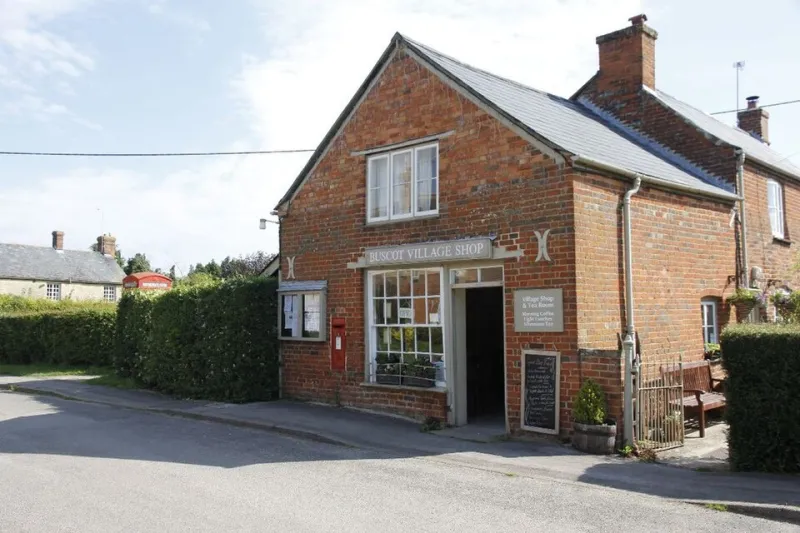
Photo: Bill Nicholls , CC BY-SA 2.0, via Wikimedia Commons
There is a certain cottage listing photo doing the rounds. Dusk, a steaming tub, a lantern, two glasses of something cold balanced on the rim. It is lovely. It is also, as a guide to whether you will enjoy the week, close to useless.
The amenity I look for first is a duller one: a shop you can walk to. Not a farm shop with a deli counter nine miles away, and not a welcome hamper left on the table. A real, everyday village shop — the sort with a Post Office counter at the back, a rack of papers by the door and a slightly unpredictable selection of tinned goods.
A hot tub is a photograph. A shop is a place
Both are nice. But one of them changes the shape of your day and the other just changes your evening.
When there is a shop within ten minutes on foot, you stop planning meals like a military operation. You buy what looks good that morning. You walk down for milk and come back with a loaf, a punnet of local strawberries and a chat about the weather with someone who has lived there for forty years. The break becomes porous. You are not sealed inside a lovely building waiting for the next booked thing; you are part of a place, briefly.
When the nearest shop is a twenty-minute drive, the opposite happens. You batch-buy on day one, you forget the butter, and you spend the week rationing it. Every small errand becomes an outing. Some people love that. I have found it quietly tiring.
What a proper shop tells you about a village
A shop that has survived in a village of four hundred people is doing something right. It is usually a sign of other things worth having: a pub that is still trading, a church that is not padlocked, a primary school, a village hall with a noticeboard advertising a quiz night nobody has bothered to take down.
It also tells you the village is not purely a dormitory for second-homeowners. That matters more than most listings admit. Places with a working shop tend to be places where you can turn up, buy a paper and not feel like an intruder.
How to check before you book, without trusting the photos
Listings are enthusiastic by nature. "Close to local amenities" can mean anything from a shop opposite the gate to a forty-minute round trip. Do the boring checking yourself and it takes about five minutes.
Start with the postcode, not the village name. Pop it into a mapping app and switch to satellite. Look for the shop as a physical thing — a forecourt, a loading area, a couple of cars outside at an odd hour. A shop that exists only as a pin on a map may well have closed in 2019.
Use street view along the walk, not just the drive. If the route from the cottage to the shop has no pavement on a national-speed road, then in practice you will drive. Ten minutes on a map is not ten minutes with a child, a dog and a bag of shopping.
Check the hours the shop actually keeps. Plenty of rural shops shut at 1pm on a Wednesday and all day Sunday, and a surprising number close for a fortnight in January. An independent bakery that opens four days a week is wonderful — as long as one of those days is the one you arrive on.
Search the shop's own name. Small shops often have a Facebook page that is updated more often than any directory. Recent posts with bread deliveries and opening times are a good sign. No posts since 2022 is not.
Look beyond the shop, too
On a week-long stay, the shop is the anchor but not the whole picture. A butcher who sells on a Thursday, a bakery with a hatch, an honesty-box eggs stand at the end of the lane, a milk vending machine at a dairy farm — these all do the same job in a slightly different way. They give you a reason to leave the cottage on foot and come back with something in a bag.
A good test of a listing is whether the owner mentions these things at all. Hosts who live locally usually cannot help themselves. They will tell you which butcher to use and which day the fish van comes. That kind of unprompted detail is worth more than another paragraph about the underfloor heating.
The honest caveat
Not every rural escape needs this. If your plan is a remote week of walking, reading and cooking on a wood burner, then no shop within three miles might be exactly the point — and a well-stocked larder plus a decent cool box is a perfectly good answer.
But if you are choosing between two cottages at a similar price, one with a tub and a twenty-minute drive to the nearest anything, and one with no tub and a shop four minutes down the lane, I would take the second every time.
The tub is a treat you use for forty minutes. The shop is the thing that makes the week feel lived-in. And nobody has ever come home from a cottage break and fondly remembered the bubbles.