Worktop Maths and Fridge Forensics: What Cottage Kitchen Photos Really Tell You
Cottage kitchen photos are designed to make you feel something. A scrubbed oak table, a jug of wildflowers, a range cooker glowing like a small cathedral. Lovely. But when you are booking a rural stay for a long weekend in 2026, the kitchen has to do more than look good in soft focus. It has to absorb a supermarket shop, dry a tea towel, house a pint of milk and produce something hot without a hunt for a missing colander.
So before you fall for the copper pans, put on your practical hat. These are the details that separate a kitchen that works from one that merely photographs well.
Start with the worktop, not the range
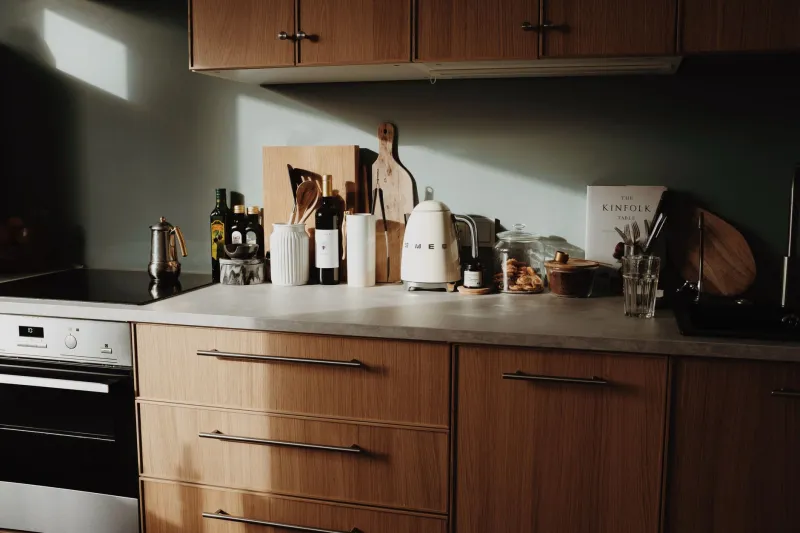
A big cooker is the easiest thing to photograph and often the least useful clue. What matters is clear, flat space beside it. Look closely at the listing images and count the worktop runs. Is there a decent stretch for chopping, or is every surface already occupied by a kettle, a utensil pot and a decorative slab of slate?
A cottage kitchen with one narrow strip between sink and hob can still be charming, but it will make a Sunday roast feel like a game of culinary Tetris. If you plan to cook properly, look for at least one usable prep area that is not also the draining board. Also check whether the worktop is beside the fridge door or under a low beam, two spots where elbows and chopping boards tend to collide.
Remember that photos are often taken with wide lenses. A worktop that looks generous may be little more than a metre in real life. If the listing has a floor plan, use it. If not, ask the owner a direct question: 'Where would I actually chop vegetables?' It sounds fussy. It is not.
The fridge test: litres, shelves, and the freezer drawer
A tiny under-counter fridge is fine for a couple on a short break. It is a problem when four people arrive with a cool box and a plan for three cooked breakfasts. Look at the photos for clues: is the fridge integrated, freestanding, or hidden under the stairs? Is there a freezer at all, or just an ice box the size of a shoebox?
The freezer matters more than many guests expect. A rural cottage stay often means buying local meat, freezing leftovers or keeping a bag of peas for the night nobody wants to cook. An ice cube tray is not a freezer. If the listing mentions a 'fridge with icebox', assume that means a small compartment that will not take a pizza box.
Check shelf configuration too. Door shelves are useful for milk and condiments, but tall bottles need a full-depth shelf. If you are travelling with children or planning a celebration, ask whether there is space for a celebration cake. The answer tells you more about the kitchen than the colour of the cupboards.
Dishwashers: useful, useless, or just small
A dishwasher sounds like a luxury until you realise it is a slimline model that takes two days to fill. In a small cottage, a slimline machine can still be a sensible use of space, but it changes how you plan meals. If you are cooking a big one-pot dinner, you may spend the evening hand-washing the pans anyway.
Look for the words 'slimline', 'tabletop' or 'compact' in the listing. A tabletop dishwasher is better than nothing for a couple, but it is not a workhorse for a family. Also check whether the dishwasher is in the kitchen or squeezed into a utility room. A machine in a separate outbuilding is fine in summer and less appealing in February.
Most importantly, ask whether the dishwasher actually works. Reviews are your friend here. A surprising number of cottages have a dishwasher that is really a drying rack with delusions of grandeur.
Drying racks, bins, and the bits nobody photographs
Wet tea towels and damp swimming things need somewhere to go. Look for a drying rack in the photos, or ask if there is one. A cottage with no drying space becomes a cottage with towels draped over every chair by Saturday morning. In a rural stay, where muddy boots and wet coats are part of the deal, a useful utility room or porch is worth its weight in gold.
Check the bin situation too. A tiny kitchen bin that fills up after one meal is a small but real annoyance. If the cottage asks guests to separate recycling, make sure the instructions are clear before you arrive. Nobody wants to spend the first evening of a restful break decoding four different bins.
The shop question: can you actually self-cater?
A beautiful kitchen is no help if the nearest shop is a forty-minute round trip and closes at five. This is the detail that turns a self-catering stay from relaxing to logistical. Before booking, find the nearest supermarket, village shop and petrol station on a map. Then check the opening hours for the days you are there.
A farm shop with great sausages is a treat, but it may not sell dishwasher tablets or a pint of milk at 8pm. If you are arriving late, ask whether the owner offers a starter pack. Some cottages do; many do not. A small welcome hamper is lovely, but it is not a substitute for knowing where the actual shop is.
In 2026, many rural shops have adjusted hours or rely on volunteers. A quick phone call or a look at recent reviews will tell you more than an outdated listing description. If the kitchen is small and the shop is far, plan simpler meals. Pasta, soup and a decent loaf can carry a weekend beautifully.
A five-minute pre-book checklist
Before you click book, ask yourself: is there clear worktop space for the meals I actually plan to cook? Is the fridge big enough for the shop I intend to do? Is there a freezer that can hold more than an ice tray? Will I be hand-washing everything because the dishwasher is tiny? Where will wet coats and tea towels dry? And can I reach a shop without turning the weekend into a driving tour of the county?
A cottage kitchen does not need to be a professional setup. It needs to be honest about what it can do. The best rural stays are the ones where the kitchen quietly gets out of your way, leaving you to enjoy the fire, the pub and the view. The copper pans can stay decorative. You just need to know where the chopping board is.